The vine cycle in June: when the bunch begins to take shape
In the vineyard, June is a decisive transitional month. After flowering, the vine enters a new stage in its vegetative cycle: the pea-size berry stage. This is when the berries that successfully set begin to develop, the bunches start to take shape, and the harvest shifts from expectation to visible potential.
At first glance, it may seem like a discreet phase. It does not yet carry the pace of harvest, nor the visual impact. But for those who follow the vineyard closely, June is one of the most important months of the growing season. It is here that the vine’s behaviour, the balance of each plot and the direction of the season begin to reveal themselves more clearly.
More than a month of growth, June is a month of observation, precision and constant care. Because in the vineyard, quality is built gradually, through successive stages monitored with rigour and close attention.
What happens in the vineyard in June?
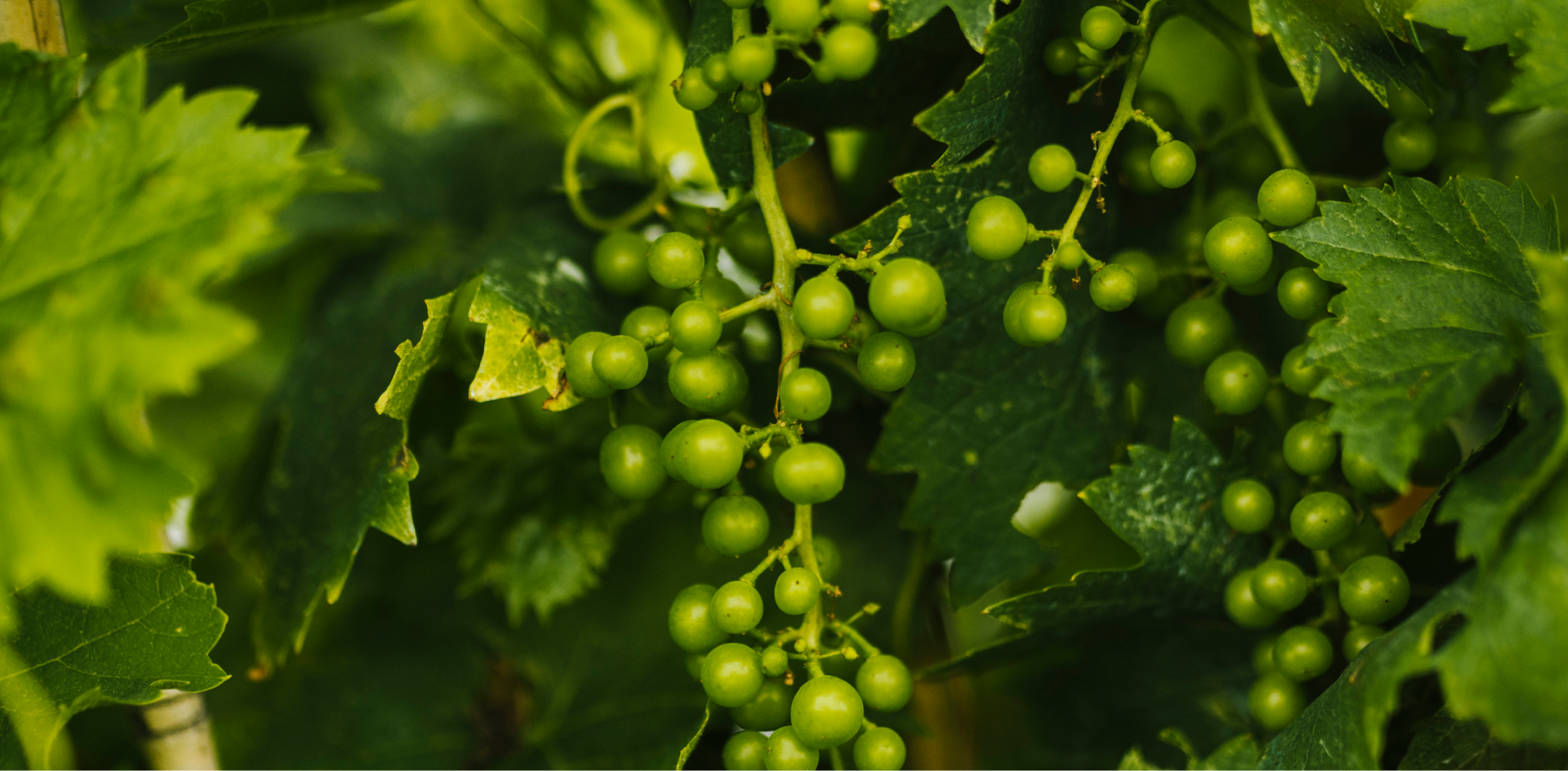
In the annual vine cycle, June corresponds to the pea-size berry stage, which usually extends into July. After flowering and fruit set, the berries begin to develop and reach a size similar to that of a pea, which gives this phase its name.
This is the moment when the bunch truly begins to take shape. What until now was a delicate cluster of fertilised flowers becomes a more visible, more defined structure, one that is closer to its final form. The vine remains in a period of strong vegetative activity and attention in the vineyard intensifies: it is time to monitor berry growth, observe bunch development and ensure that the plant remains balanced on its path towards ripening.
The pea-size berry stage: a discreet but decisive phase
The pea-size berry stage may go unnoticed to the untrained eye, but it plays a decisive role in crop quality. It is at this point that one begins to understand more clearly how the vine responded to flowering and what productive potential it is building.
By observing berry development, viticulturists can assess bunch evolution, uniformity and the balance between yield and vegetative vigour. This reading of the vineyard is important because it helps anticipate how the vines will behave in the weeks ahead and supports decisions throughout the summer.
In practice, June marks the shift from promise to definition. The bunch is no longer simply a possibility, it begins to establish itself as fruit.
Why is June so important in the vine cycle?
June is a key month because it represents a phase of consolidation. Berry development and bunch evolution provide tangible signs about the condition of the vineyard and the path the season may take towards harvest.
At this stage, observation is continuous. The vine is in full activity, and any imbalance whether caused by disease pressure, uneven growth or other factors affecting the plant can compromise both yield and grape quality. That is why technical monitoring becomes so important: not only to protect vineyard health, but also to ensure that the vine channels its energy in a balanced and consistent way.
In viticulture, June is one of those months in which a great deal of work is done to prepare for something that still lies ahead, but which begins to take shape here: the harvest.
Work in the vineyard during June
If harvest is the most visible moment of the winegrowing year, June is one of the most demanding in terms of vineyard monitoring. At this stage, vineyard work is centred above all on close observation of the plant’s behaviour and on interpreting the signs it offers.
Monitoring berry growth
After fruit set, the berries begin to develop and the bunch enters a stage of expansion. The way this growth unfolds is important for assessing vineyard uniformity and understanding how each plot is responding to the conditions of the season.
Analysing bunch development
This is also the moment when bunch development patterns begin to be assessed. Observing the number of berries, their distribution and the evolution of the bunch helps build a clearer understanding of the vine’s productive potential.
Protecting the vineyard and preserving grape quality
With the vine in active growth, close monitoring of vineyard health remains essential. June requires presence in the field, the ability to anticipate and permanent attention to detail, so that the grapes can continue their path towards ripening under the best possible conditions.
June in the vine cycle: between flowering and véraison
To understand the importance of this stage, it helps to place it within the vine’s broader cycle. After winter pruning and dormancy, the plant awakens with budburst and enters a period of accelerated growth throughout spring. Flowering follows a defining moment in which fruit formation begins.
It is after this stage that the pea-size berry stage appears, typically associated with June and July. Later, in summer, the vineyard advances to véraison, the phase in which berries begin to change colour and ripening starts. From there, the focus gradually shifts towards sugar accumulation, acidity evolution and determining the ideal harvest date.
Seen in this light, June occupies a pivotal place in the vine cycle: it comes after flowering, but before ripening. It is an intermediate stage, less visible perhaps, but absolutely decisive.
Harvest begins long before the grapes are picked
When we think of harvest, we usually think of the moment when grapes are picked. But in practice, harvest begins long before August or September. It begins in the decisions taken throughout the vegetative cycle, in the close monitoring of the vineyard and in the ability to interpret the rhythm of nature in each plot.
June is a perfect example of this. What happens during this phase directly influences the quality of the grapes that will arrive at the winery: the uniformity of development, the balance of the plant, the health of the bunches and the consistency of the ripening process. All of this will shape the final profile of the wine.
That is why, in quality-focused viticulture, there are no minor stages. There are only different moments within the same process, all of them essential in transforming terroir, knowledge and time into wine.
June in the vineyard: the value of time and observation
June may be less visible than harvest, but it is decisive for everything that follows. It demands attention, close reading of the vine and a constant presence in the vineyard. It is during this phase that the future of the crop begins to take clearer shape, as bunches develop and the vine continues, step by step, towards ripening.
In the end, that is what great wine is made of: nature, time and care. And, very often, also of a June that has been carefully followed.